How to Track Your Brand Mentions Across AI Chatbots
AI chatbots are now a first touchpoint for buyers — but most brands have no visibility into what ChatGPT, Perplexity, or Gemini actually say about them. This guide breaks down how to monitor your brand across AI platforms, what to do when you spot inaccurate or missing mentions, and how to turn it into a repeatable process.
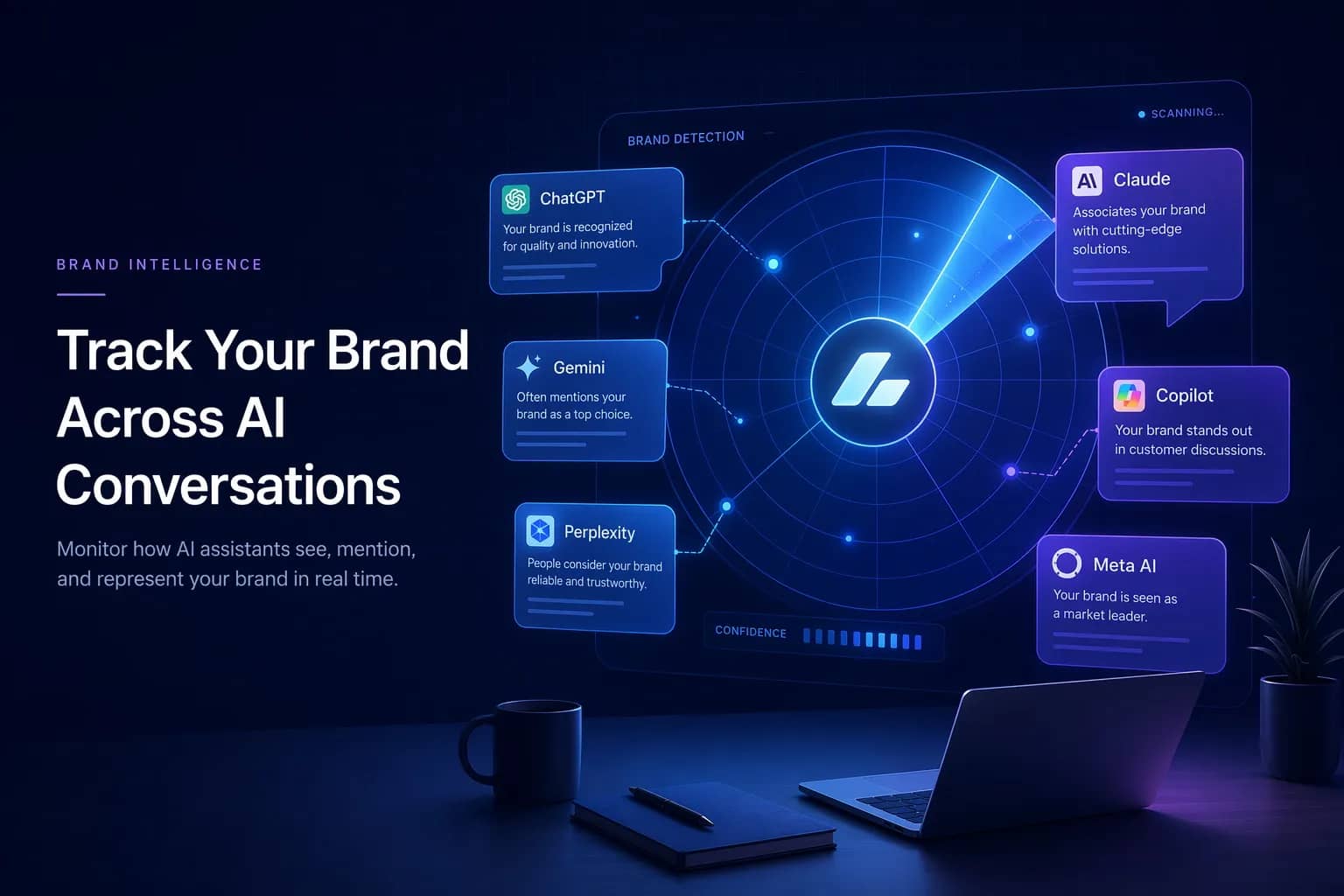
Search behavior has shifted. Before someone visits your website, there's a good chance they've already asked ChatGPT, Perplexity, or Gemini what they think of you. And unlike a Google results page, there's no way to see that conversation happen. No analytics dashboard flags it. No notification tells you your brand just got compared to a competitor and came up short.
This is the new blind spot in brand visibility, and most businesses haven't built a process to address it. Here's how to start.
Why AI Chatbot Mentions Are the New Brand Visibility Metric
For years, brand monitoring meant tracking search rankings, backlinks, and social mentions. That's still relevant, but it's no longer the full picture. AI chatbots now generate direct answers to questions like "best project management tools" or "is [brand] worth it," often without citing a single source. The user reads the answer, forms an opinion, and moves on.
If your brand is left out of that answer, described inaccurately, or overshadowed by a competitor, you may never know. That gap matters most for growing companies and product launches, where early impressions shape word of mouth long before a large brand presence exists to correct the record.
The Cost of Not Knowing What AI Says About You
An AI model working from outdated training data might describe a product feature you removed a year ago, quote a price you no longer charge, or confuse you with a similarly named competitor. Each of these small inaccuracies compounds. Every time someone asks a related question, the same flawed answer resurfaces, and it does so without your knowledge.
Which AI Platforms Actually Matter for Monitoring
Not every platform behaves the same way, so it helps to know where to focus first:
ChatGPT – generates answers primarily from training data, updated periodically.
Perplexity – cites live sources, making it easier to trace where a mention originated.
Google Gemini – blends search data with generative answers, often surfacing in Google's AI Overviews.
Microsoft Copilot – integrates web results with conversational responses.
Claude – increasingly used for research and comparison-style questions.
Start with the platforms your audience is most likely to use, then expand from there.
Manual Tracking Methods You Can Start Today
You don't need specialized software to begin. A consistent manual process will surface most issues.
Run a fixed set of test queries weekly. Ask each platform variations of "best tools for [your category]," "alternatives to [your product]," and "is [your brand] good." Keep the phrasing consistent so you can compare results over time.
Check for consistency across platforms. If ChatGPT and Perplexity describe your product differently, that's worth investigating. Contradictions often point to outdated or conflicting source material online.
Log what you find. A simple spreadsheet with the date, platform, prompt, and response is enough to start spotting patterns. Screenshots help when responses change quickly.
Building a Query List That Reflects Real Buyer Behavior
The best test queries don't come from guessing. Pull actual phrasing from customer support tickets, reviews, and sales call notes. Include direct comparison questions too, since "X vs. Y" prompts are exactly where competitor mentions tend to appear instead of yours.
Automated and Emerging Tools for AI Mention Tracking
A new category of tools, often called generative engine optimization (GEO) platforms, has emerged specifically to monitor AI visibility. These tools typically run scheduled prompts across multiple chatbots, flag new or changed mentions, score sentiment, and track which sources the AI cited.
This space is still young, and coverage varies between tools. Treat automated monitoring as a starting point rather than a complete solution, and keep running manual spot-checks alongside it.
What to Do When You Find a Problem
Once you spot an issue, the fix depends on what you found:
Inaccurate information usually traces back to outdated content on your own site. Update product pages, FAQs, and structured data so accurate details are available for models to draw from.
Missing mentions often mean you lack presence on the third-party sites AI models favor, such as review platforms and industry roundups. Building a presence there helps close the gap.
Negative sentiment points to a real issue in the product or customer experience. Fix the underlying problem first; the mention will follow.
Turning Monitoring Into a Repeatable Process
A one-time check tells you very little. Set a cadence: quick manual queries weekly, a deeper review across all platforms monthly. Assign clear ownership, since this kind of tracking tends to quietly disappear once the initial curiosity wears off.
For early-stage products and new launches, this habit matters even more. The way AI models describe you today shapes how they'll describe you months from now, and small corrections made early are far easier than untangling a reputation problem later.
Start small. Pick three test queries, run them across two platforms this week, and see what comes back. That's the whole system — repeated consistently, it's enough to keep your brand accurately represented as AI becomes a bigger part of how people search.


