Automate Affiliate Link Tracking and Boost Your Revenue
Broken links and bad attribution are quietly costing you commissions. Here's how automating affiliate link tracking recovers lost revenue — and scales without adding headcount.
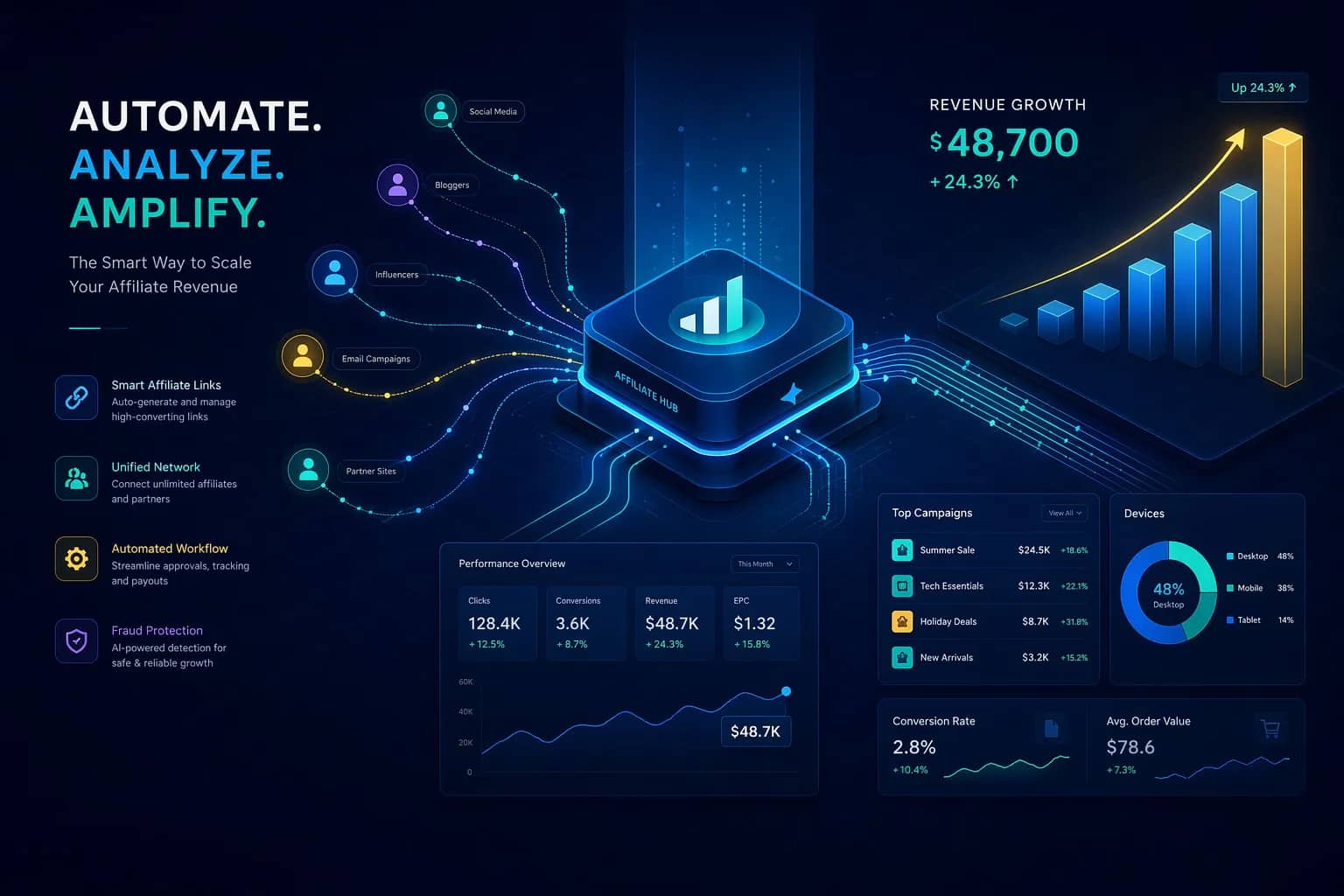
Affiliate revenue is only as reliable as the tracking behind it. You can negotiate great partnerships and drive solid traffic, but if your links are broken, mistagged, or buried across five different dashboards, you're leaving commissions on the table without even knowing it. As affiliate programs scale, manual link management stops being a minor inconvenience and starts becoming a real revenue leak. Automating your affiliate link tracking isn't just a technical upgrade. It's one of the highest-leverage moves you can make for predictable, scalable revenue.
The Hidden Cost of Manual Affiliate Link Management
Manual tracking feels manageable when you have a handful of partnerships. It stops feeling manageable fast.
Broken and expired links are the most common culprit. Affiliate programs change their URL structures, products get discontinued, and redirect rules shift without warning. Unless someone is auditing every link by hand on a regular basis, dead links sit quietly on your site, sending traffic nowhere and generating zero commission.
Misattributed or lost clicks create a quieter but equally costly problem. Manual tagging is prone to human error, and a single mistyped affiliate ID means a conversion gets credited to the wrong source, or doesn't get credited at all. You did the work to drive the click. You just don't get paid for it.
Time cost compounds as your program grows. Adding a new partnership shouldn't mean adding hours of manual link creation and monitoring, but with manual processes, that's exactly what happens. The workload scales linearly with every new partner, which means your bandwidth becomes the ceiling on your growth.
What Affiliate Link Tracking Automation Actually Solves
Automation doesn't just save time. It closes the specific gaps that manual processes leave open.
Real-time click and conversion monitoring replaces the monthly report with live visibility. You see what's converting today, not three weeks from now when the data is already stale and the opportunity has passed.
Automated tag injection and link cloaking handle the tedious, error-prone part of affiliate management for you. Every link gets the correct affiliate ID applied consistently, every time, without anyone manually copying and pasting tracking parameters across hundreds of URLs.
Centralized reporting across programs consolidates data that would otherwise live in five separate affiliate network logins. Instead of stitching together numbers from disconnected dashboards, you get one clear view of performance across your entire affiliate stack.
The Revenue Case for Automating Your Affiliate Stack
Here's where automation moves from operational convenience to direct revenue impact.
Recovering revenue you're already owed is often the first win. Fixing broken links and correcting misattribution recaptures commissions you earned but never collected, sometimes immediately reversing months of quiet losses.
Reacting faster to what's working changes how you allocate effort. With real-time data, you can shift focus toward high-converting offers within days instead of waiting for a monthly summary to tell you what already happened. Speed here translates directly into compounding revenue, since early reallocation captures more of a trend while it's still active.
Scaling partnerships without scaling headcount may be the most significant long-term benefit. Automation is what allows a single person to manage fifty affiliate partnerships with the same operational ease as managing five. Your growth stops being bottlenecked by manual capacity and starts being limited only by the partnerships and traffic you can generate.
Getting Started: A Practical Path to Automation
You don't need to overhaul your entire affiliate operation overnight. A measured rollout protects accuracy while you build confidence in the system.
Audit your current affiliate workflow first. Map out where links are created, where they're stored, and how conversions currently get tracked. You can't automate a process you haven't clearly mapped.
Choose a tracking and automation tool that fits your stack, rather than reshaping your stack around a tool. Consider your traffic volume, your existing platform, and how many affiliate networks you're managing before committing to a solution.
Test on a small batch before full rollout. Apply automation to a limited set of links first, and verify that tagging, attribution, and reporting are accurate before extending the system across your entire affiliate program. Catching an error in a ten-link test costs you almost nothing. Catching the same error after automating five hundred links costs you real revenue.
Conclusion
Automating affiliate link tracking isn't about replacing the effort you put into building partnerships and driving traffic. It's about making sure that effort actually converts into revenue, instead of leaking out through broken links, misattributed clicks, and manual bottlenecks. If you're ready to evaluate tools built for exactly this kind of automation, Pro Launch is a good place to start.