How Many Blog Posts Until Traffic Actually Starts Growing
Publishing without feedback can be discouraging, but this slow start is temporary. There’s no exact number, but research shows that most blogs need 30 to 50 focused posts before they begin to see noticeable organic traffic. Find out what to expect month by month, and see how staying consistent, creating quality content, and keeping your site healthy all work together to boost your SEO results over time.
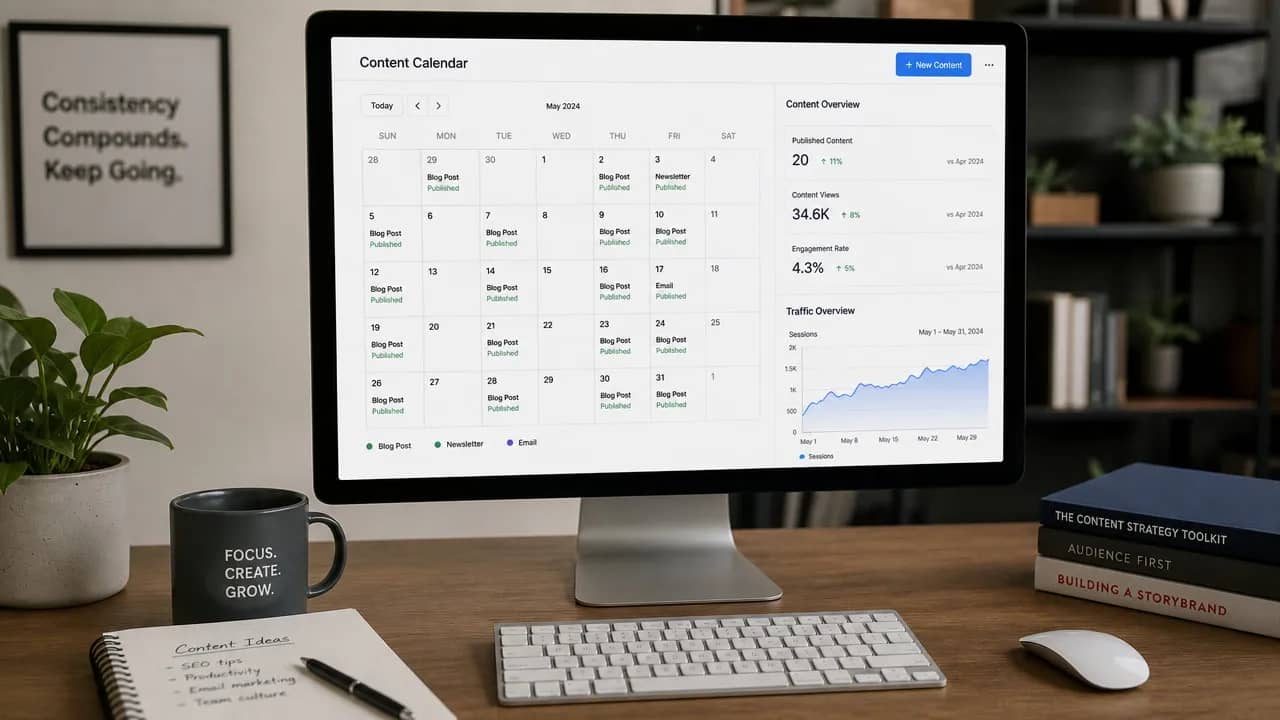
Most new blogs go quiet for months. You publish, check analytics, and the numbers barely move. The question keeps coming back: how many blog posts until traffic actually starts growing?
There is no single magic number. Data from multiple sources shows clear thresholds, though. Sites that treat content as a long game usually see the first real signs between 30 and 50 focused posts. Stronger momentum often shows up after 50 to 100. Everything depends on quality, consistency, niche competition, and how well the posts match what people actually search for.
Why the Magic Number Myth Exists
People want a clean answer. Fifty posts. One hundred. Four hundred. Older HubSpot data once pointed to a sharper jump past 400 total posts. Newer analyses, including recent publishing studies, put the practical starting point much earlier for focused content.
The problem is that these studies measure different things. Some look at total posts. Others track monthly frequency or domain age. Traffic almost never rises in a straight line. Early posts often sit unnoticed while Google figures out what the site is about. That quiet period frustrates founders who just launched a product and expect faster results.
Realistic Milestones
The first 10 to 20 posts mainly help Google understand your topic. You get indexing and a handful of long-tail impressions. Traffic stays low. This stage is pure foundation work.
Around 30 to 50 posts, topical authority starts to form. Low-competition keywords begin ranking on page one for many sites. Organic visits become measurable instead of theoretical. Multiple 2025–2026 data sets put the first noticeable growth in this range.
From 50 to 100 posts the picture improves. More keywords rank. Internal links start compounding. Sites that stay focused on related topics often see clearer month-over-month gains. Beyond 100 to 200 posts, the site can compete for harder terms and the older content keeps working in the background.
Frequency Matters as Much as Total Count
Publishing one or two solid posts a week builds critical mass faster than random bursts. New sites often benefit from higher early volume—eight to twelve posts a month—to reach the 30–50 threshold sooner. Once past that point, many teams drop to four to eight posts a month and still grow because the existing library continues to earn traffic.
Consistency signals that the site is active. Sporadic publishing, even of excellent pieces, slows the process.
What Speeds Growth Up or Slows It Down
Content quality and search intent matter more than raw volume. Posts that answer real questions outperform high-count filler. Clear structure, useful examples, and practical detail help pages rank and stay ranked.
Niche competition and domain authority change the timeline. Low-competition topics can show traffic with fewer posts. Competitive spaces need more content plus stronger supporting signals such as backlinks and solid technical foundations. Brand-new domains start at a disadvantage. Platforms that help with early visibility and links can shorten the quiet phase.
Technical basics also count. Fast pages, mobile-friendly design, and clean internal linking make a difference. Updating older posts often revives traffic without requiring a brand-new article every time.
A Practical Timeline
Months 0–3: Focus on publishing useful posts and getting them indexed. Expect little traffic.
Months 3–6: Watch Search Console for early impressions and ranking keywords.
Months 6–12: Measurable organic growth becomes realistic if you stayed consistent.
After 12 months: Compounding should be visible if the content remains relevant and the site keeps adding related pieces.
What to Do While You Wait
Track impressions, average position, and appearing queries every week. Double down on topics that already show early life. Build small clusters of related posts so pages support each other. Use targeted outreach or launch platforms for backlinks instead of waiting passively. Avoid publishing only to hit a number.
Most sites start seeing real traffic somewhere between 30 and 50 focused posts. Clearer momentum usually appears after 50 to 100. Consistency, relevance, and supporting signals matter more than any exact total. Pick a realistic cadence, match search intent, and give the process the months it usually needs.


