How to Launch Your Product With Zero Marketing Budget (11 Free Tactics)
Launching a product without an ad budget doesn't mean launching into silence. From building referral loops to borrowing existing audiences, discover 11 proven, free distribution tactics to get your product in front of early users—no media buy required.
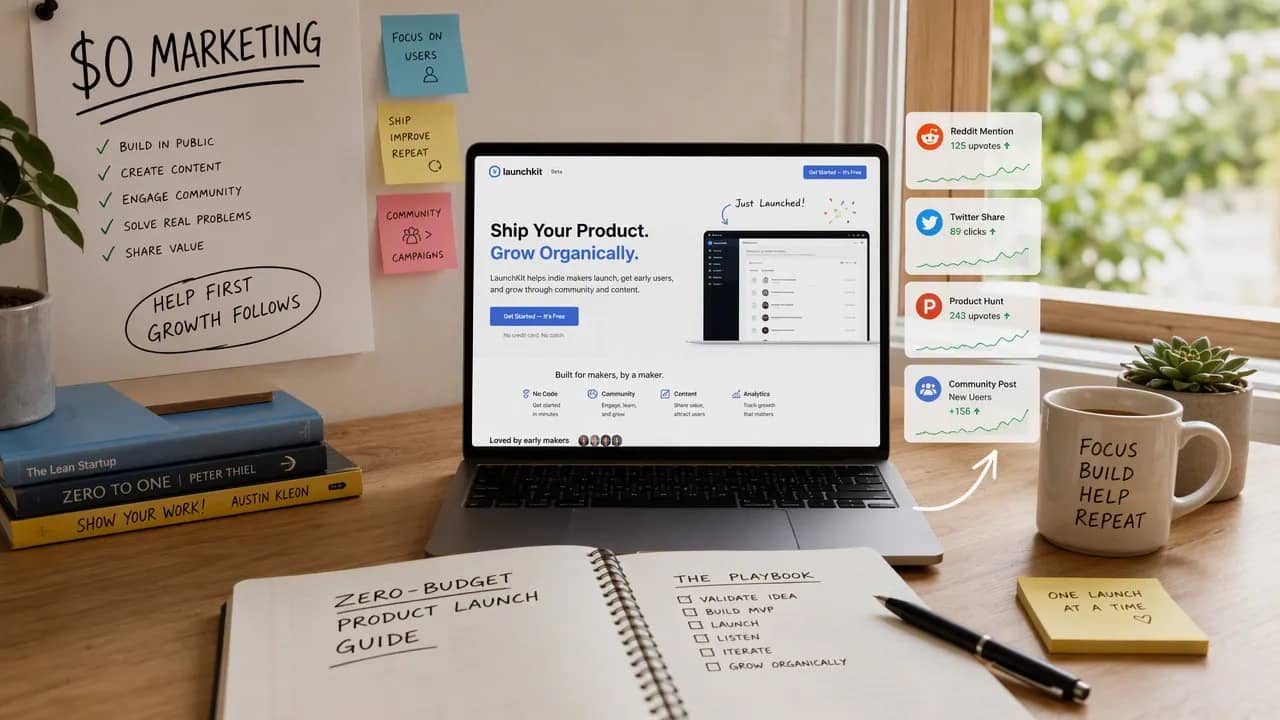
You hit publish. Then you sit there refreshing analytics, watching a flat line, because there is no ad budget and no one knows you exist.
That is a more common launch than most founders admit. You can launch your product with zero marketing budget. You cannot launch it with zero effort.
Paid ads rent attention. They do not create a reason to care. The second the spend stops, so does the traffic. The 11 free tactics below come from products that grew without a media buy. Steal the mechanic.
Why a Zero-Budget Product Launch Still Works
A listing, a referral loop, or a ranking page keeps working after launch day. A paid ad does not.
Early users from communities and waitlists convert better than cold clicks. They already wanted the thing. A zero-budget launch also forces a clearer offer. If nobody will share it for free, ads will not save it.
For the sequence around validation and positioning, start with must-have strategies for a successful product launch. This post stays on free distribution.
11 Free Tactics to Launch Your Product With Zero Marketing Budget
These are not “post more on social.” Each one is a distribution mechanic. Pick three. Run them hard.
1. Get Listed on Free Launch Platforms
Pieter Levels launched Nomad List as a simple city database and hit #1 on Product Hunt and Hacker News. The listing was the launch.
Submit to Pro Launch, Product Hunt, BetaList, and similar directories before launch day. Write a one-sentence outcome, not a feature list. Treat the page as permanent, not a 24-hour spike.
2. Build a Referral Loop Into the Product
Dropbox grew 3,900% in 15 months by giving extra storage to you and the friend you invited. The invite was the product, not a popup.
Reward a result the user already wants: extra exports, extra seats, extra generations. Make it two-sided. Put the ask after a win — first export, first project — never on an empty home screen.
3. Make Every Use an Advertisement
Every Calendly booking page said “Powered by Calendly.” The recipient became the next user. No ads. The workflow was the billboard.
If your product gets forwarded or screenshotted, that second person is a prospect. Find the artifact they already send — the invoice, the booking link, the export. Put a clear credit there. One line: “Make your own in two minutes.”
4. Show Up in Communities as a Person, Not a Billboard
Notion grew from Reddit, maker forums, and power users tearing down their setups. A 30,000-person waitlist followed the community, not the other way around.
Pick two rooms: a subreddit, an Indie Hackers thread, a Slack, a Discord. Answer 10 posts this week with no link. On the 11th, share the product only if it solves that exact thread. Spam kills this channel in an afternoon.
5. Publish the Work Instead of Buying Ads
Buffer grew on transparent posts about numbers, process, and culture. Content was the sales team.
Write one post that answers a search your buyer types the week they buy. “How to schedule posts for a two-person team,” not “why our tool is different.” Ship it on your site, then share the lesson in the communities from tactic 4. These backlink building tactics for startups cost time, not cash.
6. Open a Waitlist and Make Access Feel Earned
Superhuman used a long waitlist, onboarding interviews, and personal notes to people with an audience.
A waitlist is not a vanity counter. It is a list of people who asked to be told when you ship. Put a single-field signup live this week. Email every new name within 24 hours from a human inbox. One question: what almost made you not sign up?
7. Let Customers Make the Ads
GoPro’s marketing was the footage. Riders, divers, and travelers filmed moments no brand team could fake.
If the output looks impressive, users will publish it for their own status. Add a one-click share of the best result. Ask 10 early users for one screenshot you can reshare with credit. Build a gallery only after you have 20 real examples.
8. Borrow an Audience That Already Exists
Early Airbnb hosts posted listings to Craigslist. The traffic lived somewhere else. Airbnb went to it.
List five places your buyer already looks: a marketplace, a job board, a newsletter, a directory, a roundup. Offer those owners something useful — a guest post, a free account, a data point. One partnership with a 5,000-person list beats a month of posting into the void.
9. Build in Public Where Your Buyers Already Scroll
Pieter Levels posted Photo AI’s progress, revenue, and ugly first versions on X. People bought because they had watched it get built.
Specific numbers travel farther than polished brand posts. Pick one channel. Post three times a week: a shipping note, a number, a mistake. Screenshot the real dashboard. End with a link only when there is something to try.
10. Design the Product So Sharing Is the Natural Next Step
WhatsApp ran no ads. Growth came from a product people already had to put in other people’s hands.
Word of mouth is a design choice. Find the moment a user needs a colleague, a client, or a friend to get the full result. Make that invite take under 15 seconds. Cut anything that makes the second person create an account before they see value.
11. Let a Free Plan Do the Selling
Mailchimp’s free tier turned every small business into a live demo. The product marketed itself every time someone sent a campaign.
Free is distribution, if the upgrade path is obvious the moment they hit a real limit. Give away the core job, not a crippled toy. Put the paywall on a limit people are proud to hit: more contacts, more projects, more seats.
How to Launch Your Product With Zero Marketing Budget Without Doing All 11
Eleven tactics is a menu, not a checklist. Founders who try all 11 do none of them well.
If the product gets sent to a second person, start with referrals and invite design. No audience yet? Launch platforms, communities, a waitlist. Can you write? Content and build-in-public. Shareable output? User content and a free plan.
Submit to three platforms this week, starting with Pro Launch. Invite 20 people by hand. Show up in one community daily for seven days. A zero-budget launch fails from scatter, not from lack of tactics.
List the product where traffic still exists after launch day. Get featured on Pro Launch. Then run one more of these free product launch tactics this week.
Zero marketing budget is a constraint. It is not an excuse to ship into silence.