Optimizing Title Tags and Meta Descriptions for Better SEO Results
Learn how to optimize title tags and meta descriptions to match search intent, improve search snippets, avoid common SEO mistakes, and attract more qualified organic clicks.
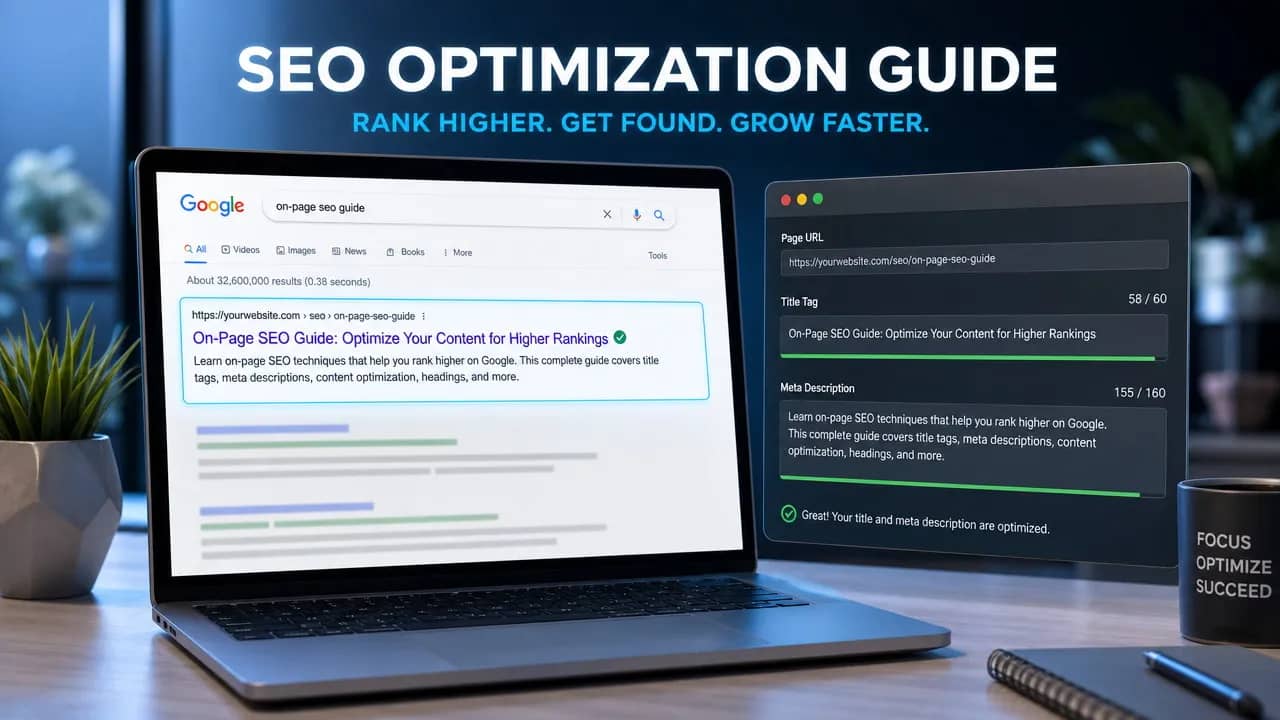
A search result has only a few seconds to earn a click. Your title tag and meta description do the heavy lifting before someone ever reaches the page. When they’re vague, duplicated, or disconnected from search intent, even strong content can lose traffic to a less useful competitor with a clearer promise.
Optimizing title tags and meta descriptions is not about squeezing keywords into limited space. It’s about accurately framing the page, matching what people want, and making the next click feel obvious.
Understand the Difference Between Title Tags and Meta Descriptions
A title tag is the HTML title of a page. Search engines often use it as the blue clickable link in search results. It also appears in browser tabs and can influence how users understand and share your page.
A meta description is a short HTML summary of the page. Google may use it as the descriptive text below the title link. It can also generate a different snippet from page content when that better matches a specific search query.
That distinction matters.
A title tag helps search engines and readers identify the main subject of a page. A meta description supports the decision to click. Neither should be treated as decorative metadata that you write once and forget.
Google’s guidance on title links and snippets makes one thing clear: search engines want helpful, unique, page-specific information. Give them that, and you improve your chances of showing a relevant result.
Start With Search Intent Before Writing Metadata
The best title tags and meta descriptions begin with a simple question: What does the searcher need right now?
Someone searching “how to optimize title tags” wants a practical explanation. Someone searching “startup launch platform” may be comparing options. And someone typing a company name likely wants that specific brand or product page.
These intent differences should shape your metadata.
For an educational article, lead with the topic and the outcome:
Title tag: How to Optimize Title Tags and Meta Descriptions for SEO
Meta description: Learn how to write title tags and meta descriptions that match search intent, explain page value, and attract more qualified organic clicks.
For a service or product page, be more specific about the offer:
Title tag: Launch Your Startup Online | Get Featured on Pro Launch
Meta description: Submit your startup to Pro Launch to build visibility, reach early adopters, and earn a relevant launch-page backlink.
The second example works because it tells the reader what they can do, who it serves, and why it may be worth their time. No smoke. No empty “best-in-class” language.
Write Title Tags That Clarify the Page’s Promise
A useful title tag tells readers exactly what they’ll find. Put the primary topic near the beginning when it fits naturally, then add a meaningful qualifier, benefit, or format.
Think of the title as a sign above a shop door. If it says “Solutions,” no one knows what’s inside. If it says “Startup Launch Strategy: Build Visibility Before Release,” the value is much clearer.
Use a Simple Title Tag Formula
Most pages can use one of these structures:
[Main Topic]: [Specific Benefit]
How to [Desired Outcome] With [Topic]
[Topic] for [Audience]: [Useful Result]
[Topic] Checklist: [What It Helps Achieve]
Examples:
Startup Launch Checklist: What to Prepare Before Going Live
Product Launch Promotion: Channels, Timing, and Tracking
Title Tags and Meta Descriptions: A Practical SEO Guide
Brand names can sit at the end of a title tag where they add recognition. But don’t sacrifice clarity just to repeat your company name across every page. A startup that nobody recognizes does not gain much from placing its brand before the page topic.
Avoid Common Title Tag Problems
Poor title tags often fall into predictable traps:
Repeating the same keyword until the title becomes unreadable
Using identical titles across multiple pages
Writing generic labels such as “Home,” “Blog,” or “Services”
Adding exaggerated claims the page cannot support
Packing in symbols, all caps, or fake urgency
Keyword stuffing is especially unhelpful. A title like “Best Startup Launch Platform | Startup Launch Platform for Startups” reads like a malfunctioning billboard. Write for a person first. Then make sure the topic remains unmistakable.
Create Meta Descriptions That Earn the Right Click
Meta descriptions are not a shortcut to higher rankings. But they can affect how compelling your result looks when it appears in search. That matters most when your page already earns impressions but receives fewer clicks than it should.
A strong meta description adds information that the title tag does not carry. It should explain the page’s practical value, include relevant details, and use a natural invitation to continue.
Make Every Description Specific
Weak description:
Discover everything you need to know about startup launches and grow your business today.
Better description:
Learn how to plan a startup launch, choose promotion channels, prepare your landing page, and track early traffic after release.
The stronger version names what readers will actually get. It also filters out people who want something else, which is good. Qualified visitors are more valuable than accidental clicks.
Keep the most useful detail early. Search engines may shorten snippets based on device size and query context, so avoid burying the point beneath filler.
Audit and Improve Existing Metadata Systematically
Metadata work pays off when it becomes a repeatable process rather than a one-time cleanup.
Start by reviewing important indexable pages in Google Search Console or your preferred SEO platform. Look for missing titles, duplicate descriptions, pages with high impressions but weak click-through rates, and titles that no longer match the current content.
Then work through this sequence:
Identify the page’s primary search intent.
Review the queries that already trigger impressions.
Confirm that the H1 and page content support the same promise.
Write a unique title tag with a clear topic and outcome.
Draft a meta description that expands on the benefit.
Monitor click-through performance and revise when needed.
Metadata should not promise a guide, comparison, or offer that the page fails to deliver. That kind of mismatch may win a click once. It rarely earns trust twice.
FAQs About Optimizing Title Tags and Meta Descriptions
Do meta descriptions directly affect rankings?
Meta descriptions are not generally considered a direct ranking factor. They can still improve how clearly a page communicates its relevance in search results, which may help attract better-qualified visitors.
Should every page have a unique title tag and meta description?
Yes. Each important indexable page needs metadata that reflects its distinct content and purpose. Reused copy makes it harder for search engines and users to understand how pages differ.
Why does Google sometimes change my title or meta description?
Google can generate title links and snippets from other page elements when it believes they better match the query or page content. Clear titles, descriptive headings, and accurate on-page copy give Google stronger material to work with.


