Complete SaaS Product Launch Checklist for 2026
Most SaaS products don’t fail from bad ideas—they fail from skipped basics. Stop treating your launch as a single event. Use this step-by-step 2026 playbook to master your pre-launch testing, launch day distribution, and the critical first 30 days of user retention.
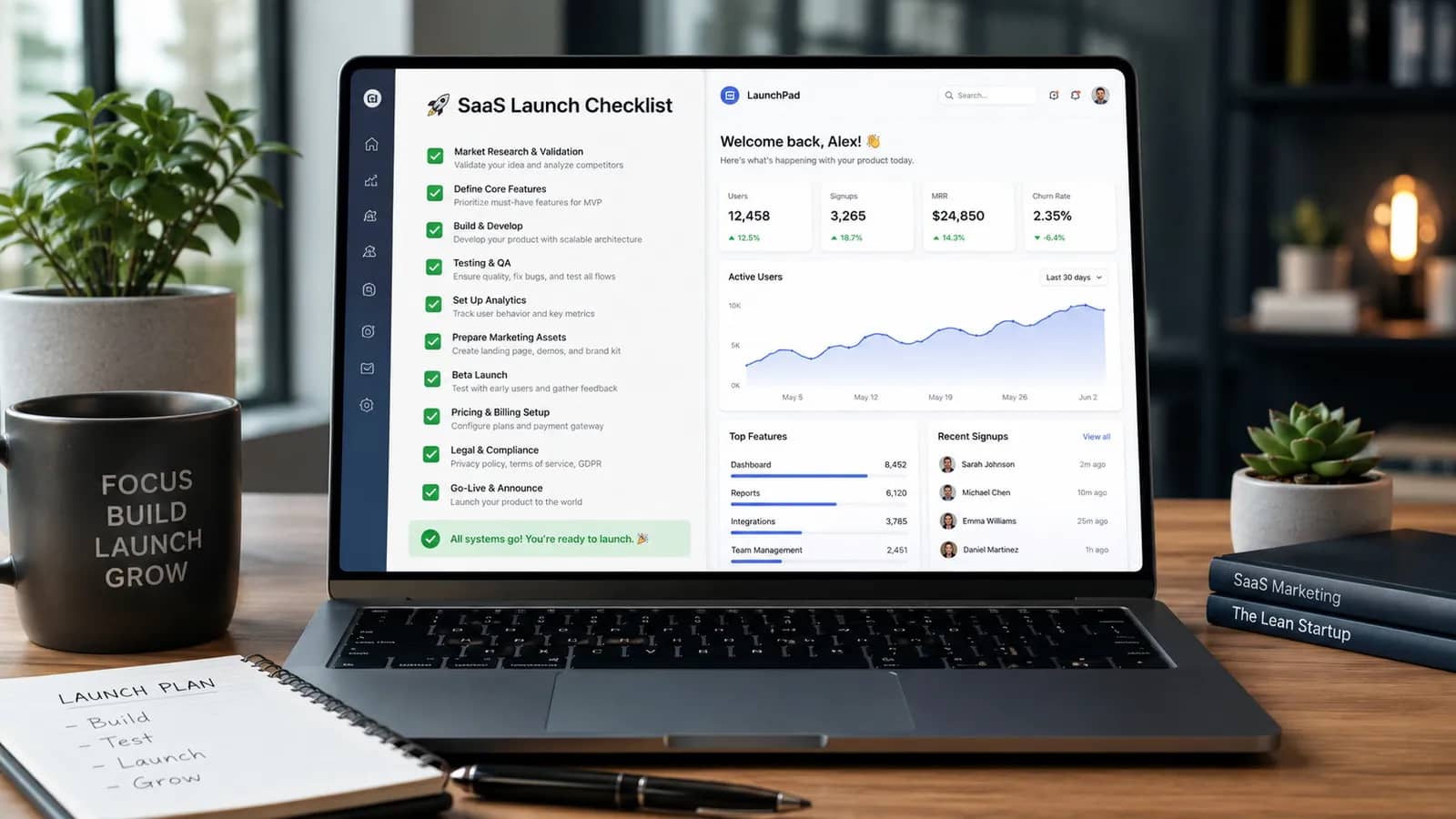
Most SaaS products don’t fail because the idea was bad. They fail because something basic got skipped. A payment flow that breaks under real traffic. An onboarding path that confuses the first ten users. A launch day that generates noise but no lasting traction. In 2026 the playbook has shifted. Soft launches and early validation matter more than a single high-visibility day. The teams that succeed treat launch as a process, not an event.
This checklist covers the work that actually moves the needle. It is organized into three clear phases so you can move through it without missing the pieces that usually cause problems later.
Pre-Launch Phase (4–8 Weeks Out)
Start with the product itself. The core user path must work from sign-up through the first moment of value and into a paid conversion. Test it yourself, then hand it to 10–20 people who match your target customer. Watch where they hesitate. Fix the critical bugs before anyone outside that group sees the product.
Technical basics come next. Authentication, live payment processing (including webhooks, trials, upgrades, and refunds), and basic security need to be solid. Confirm HTTPS is active everywhere. Check that pages load in under three seconds and that Core Web Vitals sit in the acceptable range. Install analytics that track sign-ups, activation, and early retention. Set up error monitoring so you know about problems before users start complaining.
Legal and support infrastructure belong in this window too. Publish a clear Privacy Policy and Terms of Service. Add a cookie consent banner if you need one. Make sure your billing system handles the full lifecycle without manual intervention. Prepare at least a basic support channel and a short FAQ or help article so early users have somewhere to go when they get stuck.
On the marketing side, finish the landing page. Lead with a sharp value proposition, show pricing, add whatever social proof you already have, and place clear calls to action. Build or clean a waitlist of people who actually care about the problem you solve. Write the launch assets in advance: the main announcement, a short demo video or GIF, a founder note, and two or three supporting posts. Set up your social profiles and prepare the first wave of content. Research the directories that matter for your category—Product Hunt, Indie Hackers, G2, Capterra, and relevant niche lists—so you are ready to submit when the day arrives.
Launch Day Execution
The morning of launch should feel almost quiet. Run one final end-to-end test of the full user journey. Confirm monitoring dashboards are live and someone is available to respond if something breaks. If you are using feature flags, start with a limited percentage rather than opening everything at once.
Then focus on distribution. Submit to Product Hunt on a Tuesday, Wednesday, or Thursday if that fits your schedule. Post on Hacker News, relevant Reddit threads, and Indie Hackers. Send the waitlist email. Publish the main announcement across your social channels. Platforms designed for startup visibility, such as Pro Launch, can help with scheduled exposure and ongoing backlinks. Spend the rest of the day answering comments and messages. Speed of response matters more than polished marketing copy at this stage.
Post-Launch Phase (First 30 Days)
The real work begins after the initial spike. Watch error rates, activation numbers, and conversion daily for the first week. Reply to feedback and bug reports within 24 hours. Capture early testimonials while the experience is still fresh for users.
Measure the metrics that show whether the product is sticking: activation rate, trial-to-paid conversion, day-7 and day-30 retention. If you can run a simple Sean Ellis survey, do it. Use the data to find the biggest friction points and fix them. Continue directory submissions and start a steady cadence of useful content or outreach. Write down what worked on launch day and what did not. That record becomes the foundation for the next release.
Common Mistakes to Avoid
Several patterns still sink launches in 2026. Teams chase press coverage or vanity traffic instead of talking to real potential customers. Others skip proper beta testing and discover product-market fit problems only after money and attention have already been spent. Many treat launch day as the finish line rather than the start of iteration. Onboarding and support infrastructure often get left until traffic arrives, which turns early users into frustrated ones.
A clean launch is less about perfection and more about preparation. Work through the checklist, adapt the items to your team size and stage, and keep the focus on the users who will actually pay. The products that gain lasting traction in 2026 are the ones that treat the first thirty days with the same seriousness as the weeks that came before.


