What to Do After Launching a SaaS Product
Once the announcement ends, name one owner, one reply channel, and a contact list split by how far people got. Ask while their experience is still specific, follow up before they go quiet, and ship one change that more than one person hit, apart from scoring the launch.

Monday has no clear job once the announcement ends, and what to do after launching a SaaS product is easy to put off until early users forget the details. Without a named owner, one place for replies, and a rule for what ships next, requests pile up and nothing leaves the list.
Start by lining up the people who tried the product, one feedback channel, and a single owner for the replies. Ask while their experience is still specific, then follow up before they go quiet. Choose the next improvement from what people use more than once, and keep that decision separate from scoring the launch.
You leave with a way to run the week after launch as a short sequence: write down what people did, reply while they still remember, and ship one change that showed up more than once.
Line up contacts, a feedback channel, and one owner
Right after the announcement, confirm that signup or purchase still works, and that a real person checks the reply channel. If the checkout page returns an error, or the support inbox is a shared alias nobody opens, later feedback never arrives.
Keep one contact list, split into three groups: people who started and stalled, people who are actively using the product, and people who only saw the announcement. One blast to the whole list treats a paying user and a drive-by visitor the same way.
Also keep one feedback log, and name one owner, even if that person is you, who decides what gets done this week. Without that owner, notes pile up and nothing ships.
A simple SaaS post-launch checklist runs in this order: gather specific feedback, follow up by group, then pick one improvement. Scoring the announcement is a separate task, not part of this response work.
Collect customer feedback after launch while it is still specific
Useful customer feedback after launch comes from people who already tried the product, not from a general survey sent to everyone on your list. Ask each of them what they attempted, where they stopped, and whether they will use it again this week. Suppose a new user says they tried to invite a teammate, got stuck on the permissions screen, and will not return until that step is clearer. That note tells you where the product failed them.
Sort every note into a bug, a point of confusion, or a feature wish. A long list is not a priority list. Success is the same comment coming from more than one real user. Do not change the product because of one vivid request. One customer who wants a calendar export and describes it in detail is still one customer. Wait for a second person to hit the same wall before you treat the request as a pattern.
Follow up with early users before they go quiet
Silence sets in fast, so follow up with early users in order: stalled users first to unblock them, then active users to learn what held, and announcement-only people only for a first session with a clear reason. Success is replies and a few completed core actions, not a large send.
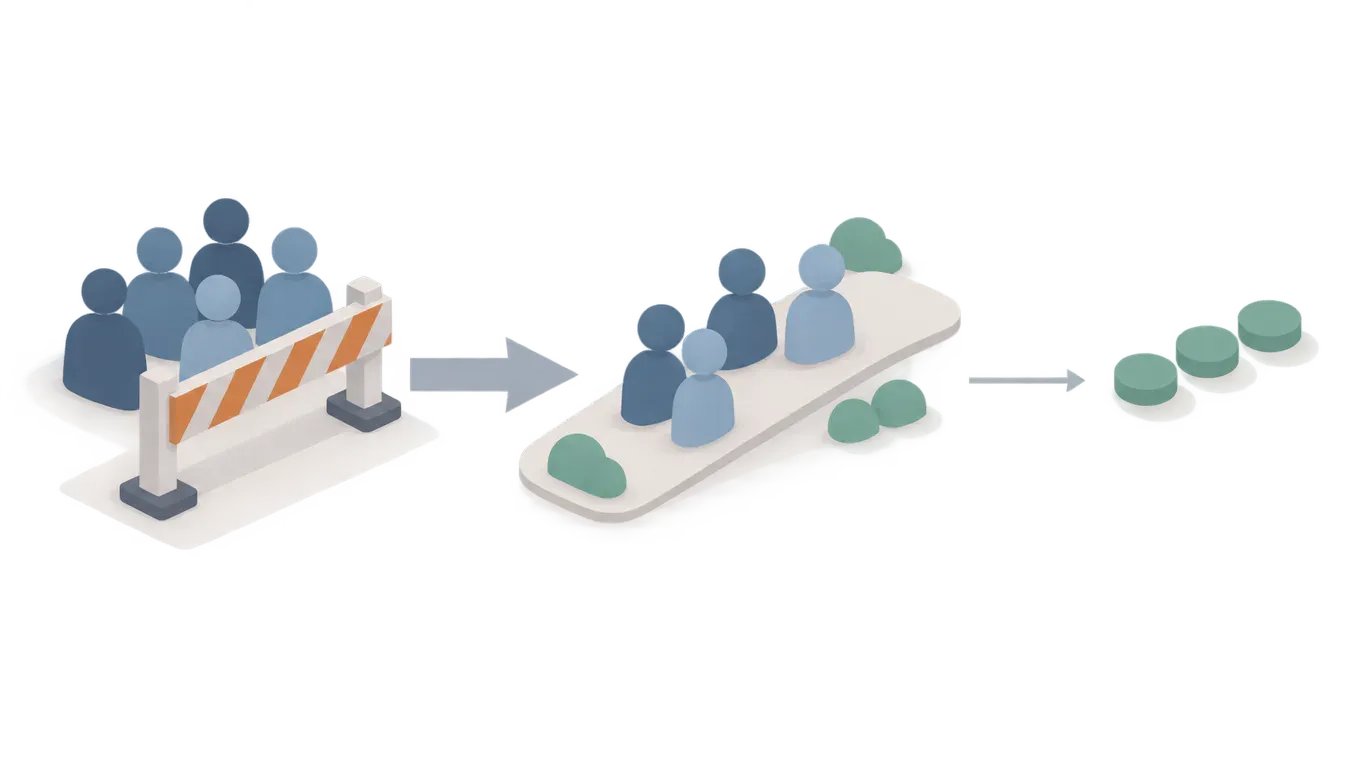
People who started and stalled
The job is to remove one blocker. Suppose someone signed up and stopped: ask what blocked them and name the next step. Then stop, or it is nagging.
People already using the product
The job is to learn what held. For example, ask a team that finished setup which step they still use, then stop.
People who only saw the announcement
Use early adopter outreach only to invite a first session, and only with a clear reason. Otherwise skip them. For lasting search discovery, see How to Turn a SaaS Launch Into Long-Term Search Visibility.
Decide what to improve next from repeated use
When the list is longer than the week, prioritize product improvements that unblock the core job for people already trying to use the product. A new report can wait if users cannot finish signup or complete the task they came for.
Each week, choose one fix you will ship, one question you still need to learn, and an explicit wait list for everything else. Write the wait list down so a loud customer does not rewrite the week. Suppose three teams ask for a calendar view while five cannot get past a broken invite. Ship the invite fix, and the calendar waits.
On a small team, support can crowd out the fix. Answer the ticket, then return to the change you chose. Some requests describe a different product. Decline those instead of stretching the roadmap to fit them.
Success means a shipped change tied to repeated feedback, then a check with those same users. Announcement reactions do not tell you whether the fix worked.
Keep response work separate from scoring the launch
Response work and launch scoring answer different questions. Mixing them is how the weeks after an announcement stall. Visits, signups, and revenue show whether the launch reached people. That scoring belongs in How to Measure the Results of a SaaS Launch. It does not tell you what to change for people who already signed up.
Teams usually fail in four ways. They wait for a perfect report before talking to users, promote every comment to the roadmap, go silent after the announcement, or rebuild instead of unblocking the step that stops someone from finishing a task.
Post-launch growth is repeated contact plus a narrower product. Suppose three early users stall on the same export. Fix that step. Do not open a redesign because the signup chart looks thin.
A few weeks of this should leave a log of real comments, follow-ups already sent, and one improvement chosen.
After a SaaS launch, unblock users and ship one fix
After the announcement, the useful work is narrower than another campaign. Assign one owner to a live reply channel and a contact list split into stalled users, active users, and people who only saw the news. Talk first to people who tried the product: what they attempted, where they stopped, and whether they will use it again this week. Sort notes into bugs, confusion, and wishes. Act only when the same comment comes from more than one real user.
Start that stalled-user conversation before you add features or wait on a launch score. Avoid changing the product for one vivid request, and do not let support replies crowd out the fix. Keep visits, signups, and revenue in launch scoring, not in this follow-up. A few weeks should leave a comment log, some replies, a few completed core actions, and one shipped change you check with those same users.


